

Apple’s Foldable iPhone May Break a Long-Standing Design Habit
Apple’s first foldable iPhone is shaping up to be more than just a new form factor—it could also rewrite some deeply ingrained iPhone muscle memory. A new report suggests Apple is planning a major button layout change for the foldable model, trading familiarity for battery life, thinness, and engineering efficiency.
According to a Weibo post from leaker Instant Digital, Apple’s foldable iPhone will rethink where physical controls live on the device.

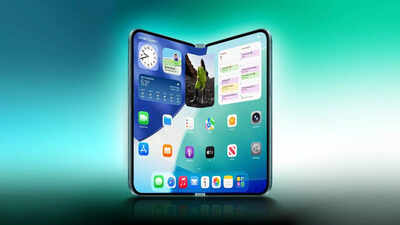

Volume Buttons Move to the Right Side
For over a decade, iPhone users have instinctively reached to the left edge for volume controls. That habit may soon be obsolete.
The report claims Apple plans to move the volume buttons to the upper right edge, placing them on the same side as the Power button—similar to the layout used on the iPad mini. As a result, the left side of the phone would be completely smooth, with no buttons or switches at all.
The right rail, on the other hand, would be packed with hardware:
- Volume up/down buttons
- A dedicated AI or Capture button
- A Power button with integrated Touch ID
This aligns with earlier reports that Apple will rely on side-mounted Touch ID instead of Face ID to keep the foldable device extremely thin.
Why Apple Is Making the Change
The motivation isn’t aesthetics—it’s engineering.
According to the leaker, the main logic board sits on the right half of the foldable iPhone. Routing wiring across the hinge to support buttons on the left side was reportedly considered inefficient or risky. By consolidating all controls on one side, Apple simplifies internal routing and reduces potential failure points around the fold.
That compromise unlocks a major benefit: more internal space.
Largest Battery Ever in an iPhone
Clearing out the left side reportedly allows Apple to maximize battery volume, and the payoff could be huge. The foldable iPhone is now tipped to feature the largest battery ever used in an iPhone.
This lines up with earlier supply chain rumors claiming Apple is testing batteries as large as 5,800mAh—a necessity for powering a dual-screen device without sacrificing all-day battery life.
Given Apple’s obsession with thinness, reclaiming internal space wherever possible is critical.
A Distinct Look From Current iPhones
Visually, the foldable iPhone is expected to stand apart from Apple’s current lineup.
The report describes:
- A horizontal rear camera layout
- Two camera lenses, plus a microphone and flash
- A black camera background, regardless of the phone’s color
That last detail is notable, as it breaks from the color-matched camera bumps seen on recent Pro models like the iPhone 17 Pro.
Inside, the main flexible display is said to use a single, small circular cutout for the front-facing camera. Apple is reportedly using a cleaner active-area cutout process to keep the display as uninterrupted as possible.
Colors, Chips, and Materials
For now, white is the only confirmed color option, though the leaker expects at least one additional finish at launch.
The foldable iPhone is currently slated to debut in late 2026, where it will likely sit at the very top of Apple’s pricing ladder. Expected specs include:
- The A20 Pro chip
- An advanced titanium frame
- A liquid metal hinge designed to handle repeated folding stress
A Foldable iPhone That Feels Different—By Design
If these details hold, Apple’s first foldable iPhone won’t just look different—it will feel different to use. Moving the volume buttons and adopting side-mounted Touch ID may take some adjustment, but the payoff could be better battery life, improved durability, and an ultra-thin design that avoids many of the compromises seen in earlier foldables.
Apple has a history of breaking habits when it believes the engineering gains are worth it. The foldable iPhone appears to be no exception.